
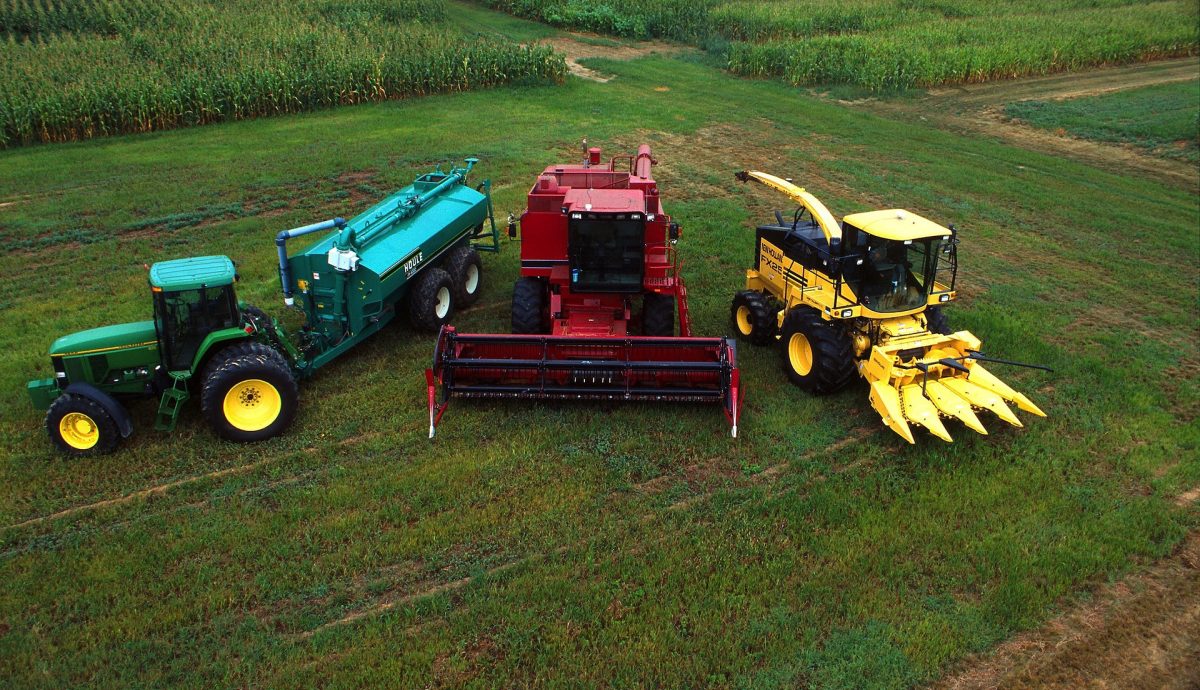
Introduction: The Mechanization Revolution
Agriculture in Zimbabwe is undergoing a quiet revolution. From the large-scale commercial farms of Mashonaland to the smallholder plots of Manicaland and Matabeleland, farmers are increasingly turning to modern equipment to improve productivity, reduce labor costs, and increase profitability. The difference between traditional farming methods and mechanized agriculture is staggering: a farmer with a hoe might cultivate one hectare per day, while a farmer with a tractor can prepare twenty hectares in the same time.
At First Quantum Resources, we understand that the right equipment can transform a farming operation. Whether you're a smallholder farmer looking for your first two-wheel tractor or a large commercial operation needing a fleet of combine harvesters, we provide quality farming equipment, genuine spare parts, and expert support to help you succeed. This comprehensive guide explores the essential modern farming equipment available, how to choose the right machinery, and best practices for maintenance and operation.
"Modern farming equipment is not just about doing things faster—it's about doing them better, more precisely, and more profitably. The right machinery can double your yields while halving your labor costs."
The State of Farm Mechanization in Zimbabwe
Zimbabwe's agricultural sector has significant potential for mechanization. Current challenges include:
- Low Mechanization Levels: Only an estimated 10-15% of farms have adequate tractor power.
- Aging Equipment: Much of the existing machinery dates from the 1970s and 1980s, with limited spare parts availability.
- Import Dependency: Most equipment is imported, making it vulnerable to currency fluctuations.
- Maintenance Gaps: Lack of skilled mechanics and genuine spare parts leads to extended downtime.
- Financing Constraints: High equipment costs limit access for smallholder farmers.
Despite these challenges, opportunities abound. Government initiatives, donor programs, and private sector partnerships are working to improve access to modern equipment. First Quantum Resources is proud to play a role by supplying quality machinery, parts, and support.
Essential Categories of Modern Farming Equipment
1. Tractors: The Workhorse of Modern Farming
Tractors are the most versatile and essential piece of farm equipment. They provide the power for virtually every other implement. Key considerations when choosing a tractor include:
- Horsepower (HP):
- 20-40 HP: Suitable for smallholder farms (1-5 hectares)
- 50-80 HP: Ideal for medium-sized farms (5-20 hectares)
- 90-150 HP: For large commercial farms (20-100+ hectares)
- 150+ HP: For very large operations and heavy tillage
- Drive Type: 2-wheel drive (2WD) for flat, dry conditions; 4-wheel drive (4WD) for wet, hilly, or heavy-duty work.
- Transmission: Manual (lower cost, more durable) or hydrostatic (easier operation, higher cost).
- Cabin Features: Open platform (economical) or air-conditioned cabin (comfort for long hours).
- Brand and Parts Availability: Choose brands with established local dealer networks and parts availability.
First Quantum Resources supplies tractors from reputable manufacturers, along with genuine spare parts and maintenance support. Our equipment is subject to inspection and testing at planned intervals to ensure reliability.
2. Tillage Equipment: Preparing the Seedbed
Proper land preparation is critical for good crop establishment. Essential tillage implements include:
- Ploughs:
- Mouldboard Plough: Traditional plough for burying crop residues and weeds.
- Disc Plough: Suitable for hard, dry soils and rocky conditions.
- Chisel Plough: Minimum tillage option that leaves crop residues on the surface.
- Harrows:
- Disc Harrows: Break soil clods and level the seedbed.
- Spring-Tine Harrows: Shallow cultivation for weed control.
- Rotary Tillers: Combine ploughing and harrowing in one pass, producing a fine seedbed.
- Ridgers: For creating planting ridges (common in Zimbabwean agriculture).
3. Planting and Seeding Equipment
Precision planting ensures even emergence and optimal plant populations. Key planting equipment includes:
- Seed Drills:
- Conventional Seed Drills: Plant seeds in rows with uniform depth and spacing.
- No-Till Seed Drills: Plant directly into crop residues without prior tillage.
- Planters:
- Maize Planters: Precision placement of individual seeds at specific spacing.
- Cotton Planters: For row crops requiring exact spacing.
- Transplanters: For tobacco, vegetables, and rice seedlings.
- Fertilizer Applicators: Band fertilizer placement near seeds for efficient nutrient uptake.
4. Crop Protection Equipment: Sprayers
Effective pest, disease, and weed control requires proper application equipment:
- Knapsack Sprayers:
- Manual (lever-operated): Economical for small plots (up to 1 hectare).
- Battery-powered: Reduced operator fatigue, consistent pressure.
- Boom Sprayers:
- Mounted Boom Sprayers: Tractor-mounted for medium-sized fields.
- Trailed Boom Sprayers: Larger capacity for commercial farms.
- Self-Propelled Sprayers: High clearance for tall crops like maize.
- Mist Blowers / Airblast Sprayers: For orchards and vineyards.
- Granular Applicators: For dry fertilizer and herbicide granules.
Calibration is Critical: Incorrectly calibrated sprayers lead to under-application (ineffective control) or over-application (waste, crop damage, environmental harm). First Quantum Resources provides sprayer calibration services and equipment to ensure precision.
5. Harvesting Equipment
Timely harvesting prevents crop losses and preserves quality. Harvesting equipment includes:
- Combine Harvesters:
- For small grains (maize, wheat, soybeans, barley).
- Header widths from 3 to 12 meters.
- Features: Grain loss monitors, yield mapping, straw choppers.
- Forage Harvesters: For silage production from maize, sorghum, or grass.
- Cotton Pickers and Strippers: Specialized harvesters for cotton.
- Potato Harvesters: Digging and separating potatoes from soil and vines.
- Groundnut (Peanut) Harvesters: Digging, shaking, and inverting.
- Sugarcane Harvesters: Cutting, chopping, and cleaning.
- Grain Platforms: For attachment to combine harvesters for specific crops.
6. Irrigation Equipment
Water is Zimbabwe's most limiting agricultural resource. Efficient irrigation equipment includes:
- Drip Irrigation Systems:
- Delivers water directly to plant roots.
- 30-50% water savings compared to sprinklers.
- Suitable for vegetables, fruits, tobacco, and row crops.
- Components: Drip lines, filters, fertigation injectors, controllers.
- Sprinkler Systems:
- Center Pivot: Covers circular fields (common for maize and wheat).
- Lateral Move: Rectangular coverage.
- Portable/Hand-Move: For smaller areas.
- Pumps and Motors: Borehole pumps, centrifugal pumps, submersible pumps.
- Filtration Systems: Sand separators, screen filters, disc filters.
- Controllers and Sensors: Timers, soil moisture sensors, weather stations.
First Quantum Resources supplies complete irrigation systems, from design to installation, ensuring efficient water use for maximum yields.
7. Post-Harvest Equipment
Post-harvest losses can reach 30% without proper equipment. Essential post-harvest machinery includes:
- Grain Dryers:
- Batch dryers for small to medium farms.
- Continuous flow dryers for large commercial operations.
- Grain Storage:
- Silos (metal or concrete).
- Grain bins with aeration.
- Hermetic storage bags for smallholders.
- Shellers and Threshers: Maize shellers, groundnut threshers, sunflower threshers.
- Grinders and Mills: Hammer mills for livestock feed; roller mills for flour production.
- Cleaning and Grading Equipment: Removing foreign material and sorting by size.
8. Precision Farming Technology
Precision agriculture uses technology to optimize inputs and maximize outputs:
- GPS Guidance Systems:
- Auto-steering reduces overlap and operator fatigue.
- Lightbar guidance for assisted steering.
- Variable Rate Technology (VRT):
- Variable rate fertilizer application based on soil maps.
- Variable rate seeding for different zones.
- Yield Monitoring:
- Combine-mounted sensors measure grain flow, moisture, and yield.
- Yield maps identify high and low performing areas.
- Soil Mapping:
- EM (electromagnetic) sensors map soil texture and organic matter.
- Soil sampling with GPS coordinates for lab analysis.
- Remote Sensing:
- Satellite and drone imagery for crop health monitoring.
- NDVI (Normalized Difference Vegetation Index) maps for nitrogen management.
- Farm Management Software: Record keeping, planning, and analysis tools.
While precision technology has higher upfront costs, the savings in inputs (fertilizer, fuel, seed) and increased yields often provide rapid payback.
Choosing the Right Equipment for Your Farm
Factors to Consider
- Farm Size: Match equipment capacity to your acreage. Oversized equipment wastes capital; undersized equipment wastes time.
- Crop Types: Different crops require different planting, protection, and harvesting equipment.
- Soil Type: Heavy clay requires more powerful tractors and different tillage than sandy soils.
- Topography: Hilly terrain needs 4WD tractors and appropriate implements.
- Power Availability: Some equipment (pumps, dryers, grain handling) requires reliable electricity.
- Capital Budget: Balance initial purchase price with operating costs and longevity.
- Parts and Service Access: Choose brands with local representation for ongoing support.
New vs. Used Equipment
- New Equipment:
- Pros: Warranty, latest technology, lower maintenance, financing available.
- Cons: Higher initial cost, faster depreciation.
- Used Equipment:
- Pros: Lower purchase price, slower depreciation.
- Cons: Unknown history, no warranty, potentially higher maintenance costs.
- Tip: Have used equipment inspected by a qualified mechanic before purchase.
Rental vs. Ownership
- Consider Renting For:
- Specialized equipment used only once per year (e.g., combine harvesters).
- Seasonal peak demands (e.g., extra tractors for planting).
- Testing equipment before purchasing.
- Consider Buying For:
- Equipment used regularly throughout the year (tractors, sprayers).
- Core equipment critical to your operation.
Equipment Maintenance Best Practices
Proper maintenance extends equipment life, reduces downtime, and improves safety. Essential practices include:
Daily Checks (Operator Responsibility)
- Check engine oil, coolant, hydraulic fluid, and fuel levels.
- Inspect tires for damage and correct pressure.
- Check belts, hoses, and connections for wear or leaks.
- Test lights, signals, and safety devices.
- Listen for unusual noises during operation.
Scheduled Maintenance (Mechanic Responsibility)
- Engine oil and filter changes: Every 250-500 hours (check manufacturer recommendation).
- Fuel filter replacement: Every 500 hours or annually.
- Hydraulic oil and filter: Every 1,000 hours or 2 years.
- Coolant flush: Every 2-3 years.
- Gearbox oil change: As per manufacturer schedule.
- Brake inspection and adjustment: Annually or as needed.
Calibration and Precision
At First Quantum Resources, we emphasize equipment calibration for accuracy:
- Sprayer Calibration: Annually and after any nozzle changes. Ensures correct application rates.
- Planter Calibration: Check seed spacing and depth at the start of each season.
- Spreaders: Calibrate for fertilizer and lime application.
- Combine Harvesters: Adjust for crop type and conditions to minimize losses.
Our assortment of state-of-the-art equipment is subject to inspection and testing at planned intervals. Specialized equipment is calibrated by the Government Inspectorate at various offices countrywide to ensure high-level precision and accuracy.
Storage and Protection
- Store equipment under cover (shed or tarpaulin) to protect from sun and rain.
- Clean equipment thoroughly before long-term storage to prevent corrosion.
- Drain water from cooling systems in freezing conditions.
- Block up implements to keep tires off the ground.
- Perform rodent control around stored equipment.
Common Equipment Mistakes to Avoid
1. Buying Too Much or Too Little Capacity
Oversized equipment wastes capital and fuel; undersized equipment causes delays and missed planting windows. Solution: Calculate required capacity based on your farm size and cropping timeline.
2. Neglecting Maintenance
"If it ain't broke, don't fix it" is a recipe for catastrophic failure. Solution: Follow manufacturer maintenance schedules and keep records.
3. Using Incorrect Settings
Wrong planting depth, improper sprayer pressure, or incorrect combine settings reduce effectiveness. Solution: Read manuals, attend training, and calibrate equipment.
4. Ignoring Safety
Farm equipment accidents cause serious injuries. Solution: Use roll-over protection (ROPS), power take-off (PTO) shields, and never bypass safety devices.
5. Poor Parts Management
Equipment downtime waiting for parts can cause missed farming windows. Solution: Stock critical spare parts (belts, filters, bearings) on farm.
How First Quantum Resources Supports Farmers
First Quantum Resources is your trusted partner for farming equipment in Zimbabwe:
- Equipment Supply: New and used tractors, implements, sprayers, harvesters, and irrigation systems from reputable manufacturers.
- Genuine Spare Parts: Manufacturer-approved components for reliable repairs.
- Calibration Services: Ensuring sprayers, spreaders, and planters operate accurately.
- Technical Support: Expert advice on equipment selection, operation, and maintenance.
- Strategic Partnerships: Relationships with leading manufacturers ensure product availability and competitive pricing.
- Training: Operator and maintenance training programs.
For any additional machinery and equipment requirements, we have strategic partners who comply with our criteria for evaluation, as per international standards and legal requirements. This ensures delivery excellence while preventing any risk of prejudice to our valued clients.
Case Study: Farm Mechanization Success
A commercial farmer in Mashonaland West was struggling with labor shortages and delayed planting. First Quantum Resources helped the farmer implement:
- 120 HP 4WD tractor with loader
- 5-furrow disc plough and offset disc harrow
- 12-row maize planter with fertilizer attachment
- Boom sprayer with GPS guidance
- Combine harvester with yield monitoring
- Complete maintenance program with spare parts inventory
Result: Planting time reduced from 6 weeks to 10 days. Harvest losses reduced by 15%. Overall farm profitability increased by 40% within two seasons.
The Future of Farming Equipment
Emerging trends in agricultural machinery include:
- Autonomous Tractors: Self-driving tractors for tillage, planting, and spraying without operators.
- Electric Farm Equipment: Battery-electric tractors and implements for reduced emissions and lower operating costs.
- Drones: Crop scouting, spraying, and mapping.
- Artificial Intelligence: Real-time pest and disease detection, yield prediction, and equipment diagnostics.
- Blockchain Traceability: Tracking equipment service history and crop production data.
First Quantum Resources stays at the forefront of these developments, helping farmers adopt technologies that improve their competitive edge.
Conclusion: Investing in Your Farm's Future
Modern farming equipment is a significant investment, but the returns in productivity, efficiency, and profitability are substantial. The right equipment enables you to plant on time, protect your crops effectively, harvest with minimal losses, and weather the challenges of variable seasons.
At First Quantum Resources, we are committed to helping Zimbabwean farmers access the equipment they need to succeed. From smallholder to large commercial operations, we provide quality machinery, genuine parts, and expert support.
Ready to transform your farming operation? Contact First Quantum Resources today. Let us help you choose the equipment that will take your farm to the next level.
Partner with First Quantum Resources
For modern farming equipment, genuine spare parts, calibration services, and expert support, contact our team today.